Portugal is one of Europe's finest travel destinations — but it contains multitudes. The cobblestone streets of Lisbon, the golden beaches of the Algarve, the Douro Valley's terraced vineyards, and the subtropical drama of Madeira all carry the Portuguese flag, yet they offer radically different holidays. If you're trying to decide between Madeira and mainland Portugal, this honest comparison breaks down every category that matters.
Climate: Eternal Spring vs Mediterranean Seasons
Madeira's single greatest advantage might be its weather. Sitting in the Atlantic roughly 1,000 km southwest of Lisbon, the island enjoys a subtropical climate that barely fluctuates. Winter temperatures hover around 17–19°C, summer peaks at a comfortable 25–26°C, and the south coast — where Funchal sits — stays reliably dry and sunny. Locals call it "eternal spring" and they're not exaggerating.
Mainland Portugal follows a more conventional Mediterranean pattern. Lisbon is glorious from April to October (think 28–35°C in summer) but can be grey and rainy from November to March. The Algarve is warmer and drier, with over 3,000 hours of sunshine per year, but still experiences a proper winter — temperatures drop to 10–15°C and many beach towns go quiet. Porto and the north are cooler and wetter still.
If you're planning a winter escape or shoulder-season trip, Madeira is the safer bet. You'll get 20°C and sunshine in January. Mainland Portugal is at its best from May to September.
Winner: Madeira for year-round consistency. Mainland Portugal for peak summer heat.
Beaches: Golden Sand vs Volcanic Drama
Let's be direct: if your ideal holiday involves long stretches of golden sand, the Algarve wins. The southern coast of mainland Portugal boasts some of Europe's most photogenic beaches — Praia da Marinha, Praia de Benagil, Praia do Camilo — with warm, calm water, dramatic sea caves, and reliable sunshine. The Algarve has been Europe's beach destination for decades, and for good reason.
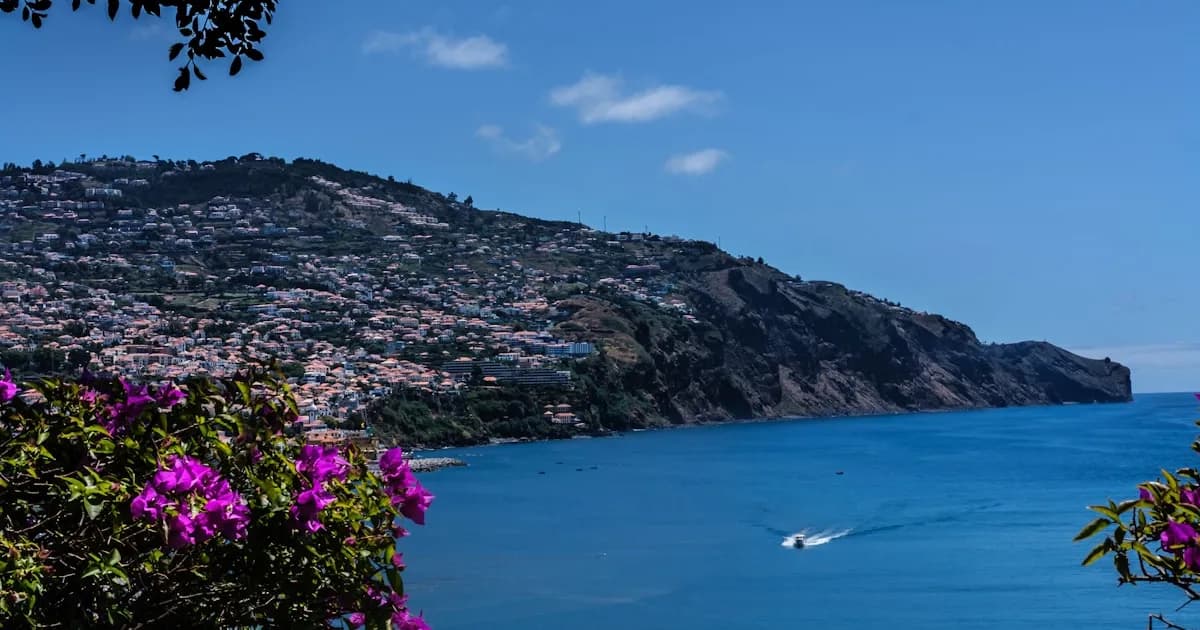
Madeira is a volcanic island, and that shapes its coastline. You won't find wide sandy beaches (with the exception of the man-made Calheta beach and the natural golden sand on nearby Porto Santo island). What you will find are dramatic volcanic rock pools — Doca do Cavacas, Porto Moniz natural pools — where the Atlantic crashes into sculpted lava formations. It's a completely different swimming experience: raw, scenic, and unforgettable.
Porto Santo, Madeira's smaller sister island, has 9 km of unbroken golden sand. A short ferry ride or 15-minute flight from Funchal gives you the best of both worlds.
Winner: Algarve for traditional beach holidays. Madeira for dramatic coastal landscapes and natural pools.
Cities: Lisbon & Porto vs Funchal
Mainland Portugal has two world-class cities. Lisbon is a capital that punches far above its weight — the trams rattling through Alfama, the pasteis de nata in Belem, the rooftop bars overlooking the Tagus, the street art, the fado houses, the nightlife that runs until dawn. Porto is more intimate but equally magnetic — the Ribeira district, port wine lodges in Vila Nova de Gaia, Livraria Lello, and the Douro River flowing beneath the iconic Dom Luis I bridge.
Funchal is charming in its own right — a compact city set into a natural amphitheatre facing the sea. The Mercado dos Lavradores is a feast for the senses, the Old Town is lined with painted doors and street art, and the Monte Palace gardens rank among Europe's finest. But Funchal is a small city of around 110,000 people. It lacks the scale, nightlife, and cultural density of Lisbon or Porto.
That said, Funchal's intimacy is part of its appeal. You can walk everywhere, the restaurant scene punches above its weight, and you're never more than 30 minutes from mountain wilderness. For travellers who prefer a quieter base, Funchal delivers something neither Lisbon nor Porto can: peace without boredom.
Winner: Mainland Portugal for city lovers. Funchal for those who prefer charm over chaos.
Adventure & Outdoor Activities: Where Madeira Dominates
This is where the comparison tilts decisively. Madeira was built for adventure.
The island packs an extraordinary density of outdoor experiences into its 57 km length. The headline act is the Adrenaline Adventures zipline in Porto Moniz — 320 metres above sea level, reaching 110 km/h over 1.6 km of cable with the Atlantic Ocean stretching to the horizon below. Add the giant swing suspended 250 metres above the coast, professional canyoning through volcanic gorges, scenic UTV rides through mountain trails, and you have one of Europe's most concentrated adventure playgrounds.
Beyond the adrenaline activities, Madeira offers over 2,000 km of levada trails — footpaths following centuries-old irrigation channels through UNESCO-listed laurel forests. The hike from Pico Arieiro to Pico Ruivo is one of Europe's finest. Whale watching, paragliding, coasteering, mountain biking, and scuba diving all thrive here.
Mainland Portugal has outdoor offerings too — surfing in Nazare and Ericeira, hiking in the Serra da Estrela, the Rota Vicentina coastal trail in the Alentejo — but nothing matches Madeira's sheer variety packed into such a compact space. On the mainland, you drive hours between adventure spots. On Madeira, everything is within 45 minutes.
The Adrenaline Adventures zipline and giant swing are unique to Madeira — there's nothing comparable on the mainland. If adventure is a priority, the island is the obvious choice.
Winner: Madeira by a wide margin for adventure density and variety.
Food & Wine: Two Brilliant Tables
Both destinations will feed you spectacularly, but the flavours are distinct.
Mainland Portugal has the broader culinary scene. Lisbon's food revolution has brought Michelin-starred restaurants alongside traditional tascas. Pasteis de nata from Belem, bacalhau prepared 365 different ways, francesinha in Porto, grilled sardines in Alfama — the mainland's food culture is deep, varied, and endlessly satisfying. Portuguese wine is having a moment too, with Douro reds, Alentejo blends, and Vinho Verde offering exceptional value.
Madeira has its own culinary identity. Espetada — garlic-and-bay-leaf-marinated beef grilled on laurel wood skewers — is the island's signature. Bolo do caco, garlic-butter flatbread, accompanies everything. Poncha, the potent aguardente-honey-citrus cocktail, is practically a religion. And Madeira wine — the fortified wine produced since the 15th century — is in a class of its own, with vintages that can age for over a century.
Seafood is exceptional in both places. Madeira's espada (black scabbardfish) served with banana is unlike anything on the mainland. The mainland counters with the freshest grilled fish on the planet at any beachside restaurant in Sesimbra or Setubal.
Winner: A tie. The mainland offers more variety; Madeira offers more character. Both will leave you planning your next meal before you've finished the current one.
Cost of Travel: Budget Breakdown
Madeira is generally cheaper than Lisbon and comparable to the Algarve. Here's a rough comparison for daily costs:
| Category | Lisbon | Algarve | Madeira | |---|---|---|---| | Mid-range hotel | 120-180 EUR | 100-160 EUR | 80-140 EUR | | Meal for two | 40-60 EUR | 35-55 EUR | 30-50 EUR | | Car rental/day | 30-50 EUR | 25-45 EUR | 20-40 EUR | | Coffee | 1.20 EUR | 1.00 EUR | 0.80 EUR |
Lisbon has become noticeably more expensive in recent years, driven by tourism and the digital nomad boom. The Algarve's high season (July-August) pushes prices up significantly. Madeira remains remarkably affordable — a full traditional meal with wine rarely tops 25 EUR per person, even in Funchal's better restaurants.
Madeira offers the best value of the three destinations. Lower accommodation costs, cheaper dining, and affordable car rental mean your money stretches further without compromising on quality.
Winner: Madeira for overall value. Lisbon and the Algarve are pricier, especially in peak season.
Getting There: Flights & Connections
Mainland Portugal is more connected. Lisbon is a major European hub with direct flights from virtually everywhere — North America, Africa, Asia, and all of Europe. Porto and Faro (for the Algarve) also have extensive direct connections, especially from the UK, Germany, and France.
Madeira has good European connections — direct flights from London, Lisbon, Frankfurt, Amsterdam, Paris, and most major cities. Flight times are 3.5–4 hours from northern Europe and just 1.5 hours from Lisbon. Budget carriers including Ryanair, easyJet, and Transavia serve the route, keeping prices competitive. However, intercontinental travellers will typically connect through Lisbon.
One advantage of Madeira: the island is small enough that you don't need internal flights. Once you land in Funchal, everything is within driving distance. On the mainland, travelling from Lisbon to the Algarve takes 2.5 hours by car or requires a domestic flight.
Winner: Mainland Portugal for global connectivity. Madeira for simplicity once you arrive.
Which Is Right for You?
Choose Madeira if you want:
- Year-round mild weather you can rely on
- Adventure activities (zipline, giant swing, canyoning, levada hiking)
- Dramatic volcanic landscapes and natural pools
- A compact island where everything is within reach
- Better value for money
- A quieter, more relaxed pace
- Walking and hiking as a central part of your trip
Choose mainland Portugal if you want:
- Sandy beaches and warm sea swimming (Algarve)
- World-class cities with nightlife and culture (Lisbon, Porto)
- A broader range of culinary experiences
- Wine regions you can drive through (Douro, Alentejo)
- Historical monuments and museums
- Easier intercontinental connections
- The variety of a larger country
For adventure seekers, Madeira is the clear winner. The combination of the zipline, giant swing, canyoning, levada trails, and whale watching — all on one compact island — creates an experience that no mainland destination can match.
Can You Combine Both?
Absolutely — and many travellers do. A popular itinerary is to spend 3–4 days in Lisbon or Porto, then fly to Madeira for a week of adventure and relaxation. Flights between Lisbon and Funchal take just 1.5 hours and are frequent and affordable.
If you have two weeks, consider starting in Lisbon, driving south to the Algarve for a few beach days, then flying to Madeira for the second week. You'll get the best of both worlds: sandy beaches and city culture on the mainland, volcanic drama and adrenaline on the island.
Frequently Asked Questions
Is Madeira better than the Canary Islands?
Madeira wins for hiking, adventure activities, and authentic culture. The Canaries win for beaches and nightlife. Both have great year-round weather.
Is Madeira expensive compared to other islands?
Madeira is generally 10-20% cheaper than comparable European islands like Mallorca or Santorini, with better value for food and accommodation.
Can I island-hop from Madeira?
You can visit Porto Santo (2.5h ferry or 15min flight). For the Azores, SATA flies direct. The Canaries require connecting via Lisbon.
Which island is best for adventure?
Madeira leads Europe for adventure tourism with its zipline at 320m altitude, 2000km of levada trails, canyoning, and coasteering.
Read Also
- 25 Best Things to Do in Madeira — The ultimate activity guide for your Madeira trip.
- Is Madeira Worth Visiting? An Honest Answer — Everything you need to know before booking.
- Madeira vs Azores: Which Portuguese Island Is Right for You? — Another island-to-island comparison to help you decide.