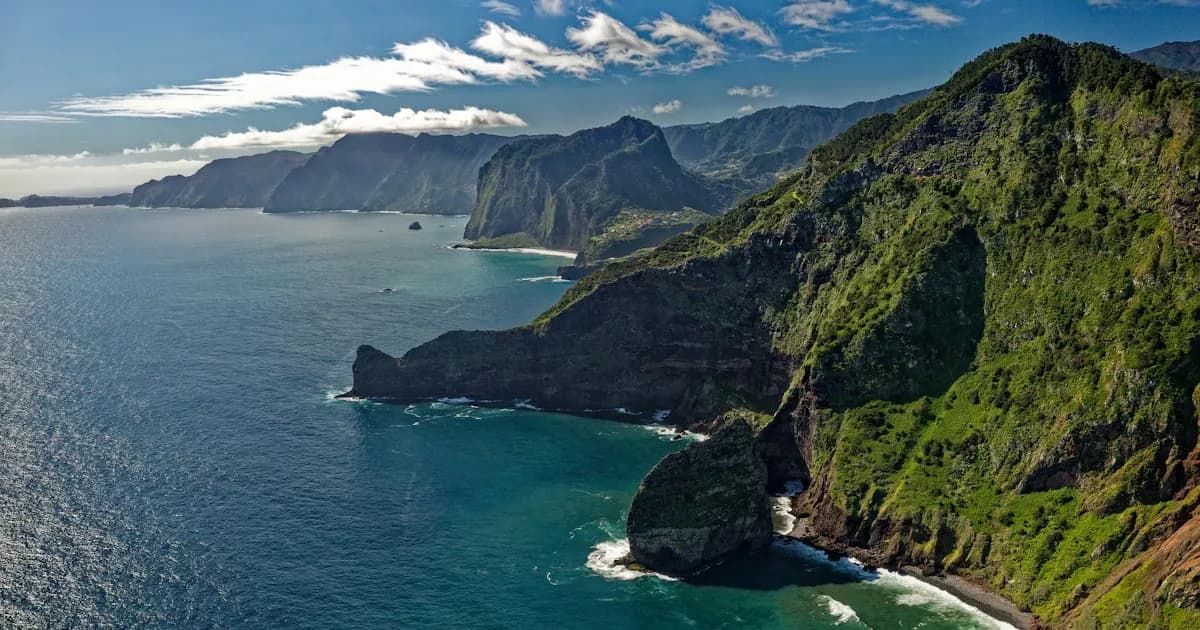
Madeira is a small island with enormous variety. Within an hour of leaving Funchal you can be standing on a volcanic peak at 1,800 metres, swimming in natural lava pools on the north coast, or winding through ancient laurel forest on a levada trail. The question most visitors ask before arriving is simple: do I actually need a car?
The short answer is yes — if you want to explore beyond Funchal. Public transport exists, but it is limited and slow. A rental car gives you the freedom to chase clear skies, stop at unmarked viewpoints, and reach places that buses simply do not serve. This guide covers everything you need to know to rent a car in Madeira confidently.
Do You Need a Car in Madeira?
If your entire trip revolves around Funchal — the old town, the market, the hotel pool — you can get by without a car. The city has decent buses, taxis, and ride-hailing options.
But the moment you want to visit Porto Moniz, hike a levada, drive up to Pico do Arieiro at sunrise, or explore the quiet north coast villages, a car becomes essential. Bus routes to these destinations are infrequent, often taking twice as long as driving, and the last return services leave early in the afternoon.
A car also lets you combine multiple stops in a single day. You can drive the north coast road in the morning, have lunch in Sao Vicente, visit the natural pools in Porto Moniz, and still be back in Funchal for dinner. By bus, you would need two or three separate days to cover the same ground.
Rental Companies and Prices
Car hire in Madeira is affordable compared to mainland Europe. Expect to pay:
- Low season (November–March): €15–25 per day for a small car
- Shoulder season (April–May, October): €20–30 per day
- High season (June–September): €30–40 per day
These prices are for economy or compact models such as a Renault Clio, Volkswagen Polo, or similar. Larger SUVs and automatics cost more.
Where to Book
Several international and local companies operate at Funchal Airport (FNC) and in the city centre:
- International chains: Europcar, Hertz, Sixt, and Avis all have desks at the airport.
- Local companies: Guerin, Rodavante, Auto Jardim, and Insular are well-established local operators that often offer lower prices and more flexible terms.
- Online aggregators: Websites like DiscoverCars, Rentalcars.com, and AutoEurope compare prices across multiple providers and sometimes offer exclusive deals.
Tip: Book at least two to three weeks in advance during summer. Supply is limited on a small island, and prices rise sharply as availability drops.
Manual vs Automatic
Most rental cars in Madeira are manual (stick shift). If you need an automatic, book early — they are fewer in number and cost roughly €5–10 more per day. Given the steep mountain roads, an automatic can make driving significantly less stressful if you are not confident with a manual gearbox.
Insurance Tips
Insurance is the area where most visitors overpay or get caught out. Here is what to know.
What Is Included
Standard rental rates in Madeira typically include:
- CDW (Collision Damage Waiver): Covers vehicle damage but usually comes with an excess (deductible) of €800–€1,500.
- Theft Protection: Covers the vehicle if stolen, again with an excess.
- Third-party liability: Legally required, always included.
Reducing the Excess
You have two options to reduce or eliminate the excess:
- Buy the rental company's Super CDW: This reduces the excess to zero but adds €8–15 per day. Over a week, that adds up to €56–105.
- Use a third-party excess insurance policy: Companies like iCarhireinsurance or WorldWide Insure sell annual policies for around €40–60 total. These reimburse you for any excess charged if you have an incident. This is significantly cheaper and covers tyres, windscreen, and undercarriage — areas that rental company policies often exclude.
Credit Card Coverage
Some credit cards (particularly American Express and certain Visa/Mastercard premium cards) include rental car insurance. Check your card's specific terms before relying on this — many exclude certain vehicle types or require you to decline the rental company's CDW, which some Madeiran operators will not allow.
Watch Out For
- Tyre and windscreen exclusions: Standard CDW rarely covers punctured tyres or cracked windscreens. On Madeira's mountain roads, both are more likely than in a city.
- Undercarriage damage: Narrow roads sometimes have raised kerbs and uneven surfaces. Check whether undercarriage damage is covered.
- Pre-existing damage: Photograph the car thoroughly before driving off. Note every scratch on the rental form. This protects you from being charged for damage you did not cause.
Driving Conditions in Madeira
Madeira is not a difficult place to drive, but it is different from what most visitors are used to. The roads are well-maintained and well-signed, but the terrain creates some unique conditions.
Mountain Roads
Madeira is essentially a volcanic mountain rising steeply from the Atlantic. Roads climb and descend constantly, with gradients of 10–15% being common. First and second gear will get a workout. If you are driving a manual, be confident with hill starts.
Narrow Roads
The main expressways (VE1, VE3, VE4) are modern, wide, and fast. But the moment you leave them for older regional roads (ER-designated), lanes narrow considerably. Some stretches of the old north coast road are barely wide enough for two cars to pass. Wing mirrors fold in regularly. Drive calmly, use your horn on blind corners, and pull into passing places when needed.
Tunnels
Madeira has over 100 tunnels, some stretching several kilometres. Most are well-lit and modern, but a handful of older tunnels on the north coast are single-lane, dimly lit, and have uneven surfaces. Switch on your headlights before entering any tunnel — it is the law and common sense.
Weather
Conditions change rapidly with altitude. You can leave Funchal in bright sunshine and encounter thick fog at the Encumeada pass twenty minutes later. Rain is more frequent on the north coast and at higher elevations. Drive with your lights on in poor visibility, and be cautious on wet mountain roads — surfaces can be slippery.
Road Rules
- Drive on the right-hand side of the road.
- Speed limits: 50 km/h in towns, 80 km/h on regional roads, 100 km/h on expressways.
- Seatbelts are mandatory for all passengers.
- Mobile phone use while driving is prohibited.
- The blood alcohol limit is 0.05%.
Parking Tips
Parking in Madeira is generally straightforward outside of Funchal.
In Funchal
Street parking in the city centre is metered and fills up quickly. Blue-line spaces require payment during working hours (typically €0.50–€1.00 per hour). Several multi-storey car parks offer all-day rates of €5–10. Your hotel may also have parking — ask when booking.
Outside Funchal
Parking at most attractions and viewpoints is free. Porto Moniz has large free car parks near the natural pools. Pico do Arieiro has a free car park at the summit (arrive early — it fills up by mid-morning in summer). Levada trailheads usually have informal parking areas nearby.
Tips
- Never leave valuables visible inside the car.
- Park facing uphill with your wheels turned into the kerb on steep streets — it is a legal requirement on gradients and prevents your car rolling if the handbrake fails.
- At the airport, the rental car return areas are well-signed. Allow an extra 15 minutes to return the car, refuel, and catch the shuttle to the terminal.
Fuel Costs
Madeira has plenty of petrol stations, particularly along the south coast and on the main expressways. Fuel prices are slightly higher than on mainland Portugal:
- Petrol (gasoline): Around €1.70–€1.85 per litre
- Diesel: Around €1.55–€1.70 per litre
Most rental cars run on petrol. A full tank for a small car costs approximately €50–60 and will last a full week of moderate driving on an island this size. Fill up before heading into the mountains or along the north coast, where stations are less frequent.
Most stations accept credit cards. Some self-service pumps require a PIN, so make sure you know your card's PIN before travelling.
Best Scenic Drives in Madeira
Renting a car is worth it for the drives alone. These are the routes you should not miss.
The North Coast Road (ER101)
The old coastal road between Sao Vicente and Porto Moniz is one of Europe's most dramatic drives. Carved into the cliff face, it winds past waterfalls tumbling directly onto the road, through short unlit tunnels, and along sections where the Atlantic crashes against rocks just metres below. Allow at least an hour for what is technically a 30-minute drive — you will stop constantly for photos.
Encumeada Pass
The ER228 between Ribeira Brava and Sao Vicente crosses the central mountain range through the Encumeada pass at around 1,000 metres. On clear days, you can see both the north and south coasts simultaneously. The road twists through dense forest and opens into dramatic mountain panoramas. It is one of the most rewarding 30-minute drives on the island.
Pico do Arieiro
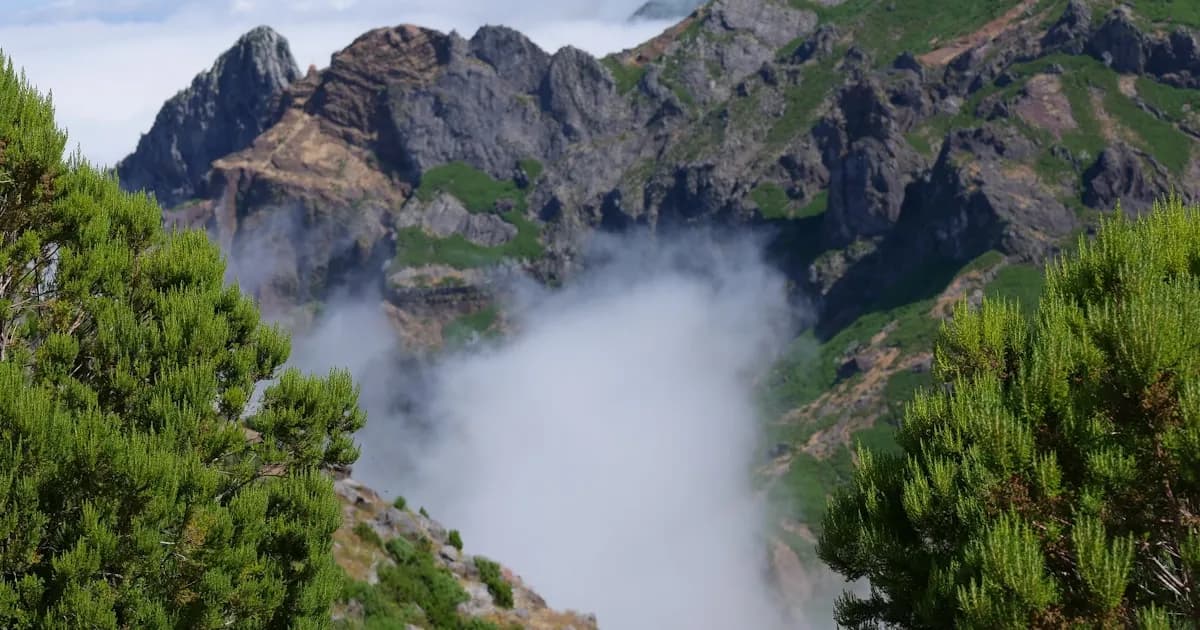
The ER202 climbs from Poiso to the summit of Pico do Arieiro at 1,818 metres — the highest point you can reach by car in Madeira. The road is steep and winding but well-maintained. At the top, you are often above the clouds, with panoramic views of jagged peaks. Go at sunrise for an unforgettable experience.
The South Coast via Calheta
A more relaxed drive follows the coast west from Funchal through Camera de Lobos, Ribeira Brava, Ponta do Sol, and Calheta. The pace is gentler here, with banana plantations, traditional villages, and the golden sand beach at Calheta as highlights.
Porto Moniz Circular Route
Combine several of these drives into a full-day circular route: Funchal to Ribeira Brava along the south coast, up through the Encumeada pass to Sao Vicente, west along the north coast ER101 to Porto Moniz, and back to Funchal via the expressway. This loop takes about four hours of pure driving time, but plan a full day with stops. When you reach Porto Moniz, consider adding some adrenaline to the trip — the zipline and giant swing overlooking the Atlantic are a highlight that most visitors call the best experience of their Madeira holiday.
Alternatives to Renting a Car
If you prefer not to drive, you still have options.
Public Buses
Horarios do Funchal operates city routes, while Rodoeste covers the western half of the island and SAM covers the east. Buses are affordable (€2–7 per trip) but infrequent on rural routes. The journey from Funchal to Porto Moniz takes about 2.5 hours by bus compared to 1 hour 15 minutes by car. Check timetables at horariosdofunchal.pt and rodoeste.pt.
Taxis
Taxis are metered in Funchal and can be hired for half-day or full-day island tours. A full-day taxi tour typically costs €100–150 and the driver will act as an informal guide. This is a good option for visitors who are uncomfortable driving on mountain roads.
Organised Tours
Many operators offer guided day trips to popular destinations. Prices range from €30–60 per person and usually include hotel pickup, transport, and a guide. Tours to Porto Moniz, Pico do Arieiro, and the levadas are the most popular.
Ride-Hailing
Bolt (similar to Uber) operates in Funchal and works well for city trips. However, it is not practical for reaching remote parts of the island.
Final Advice
Renting a car in Madeira is one of the best decisions you can make for your trip. The freedom to explore at your own pace, stop at any viewpoint, and reach hidden corners of the island transforms a good holiday into an exceptional one. The roads are manageable, fuel is affordable, and the drives themselves are a highlight.
Book your car in advance, choose a vehicle with decent engine power, photograph the car before driving off, and fill up before heading into the mountains. Do those four things, and you are set.
Check Prices and Book Your AdventureFrequently Asked Questions
Do I need a visa for Madeira?
EU/EEA citizens need only an ID card. UK, US, Canadian, and Australian citizens can visit visa-free for up to 90 days.
Is the tap water safe in Madeira?
Yes, tap water in Madeira is safe to drink throughout the island.
What plug type does Madeira use?
Type C and F plugs with 230V. UK and US visitors need an adapter.
Do I need cash in Madeira?
Cards are accepted almost everywhere in Funchal and tourist areas. Carry some cash for rural areas, markets, and small cafés.
Read Also
- Things to Do in Madeira — The complete guide to activities and attractions across the island.
- How to Get to Porto Moniz — Detailed routes and transport options for reaching Madeira's northwest coast.
- Best Day Trips from Funchal — Eight unforgettable excursions from Madeira's capital.