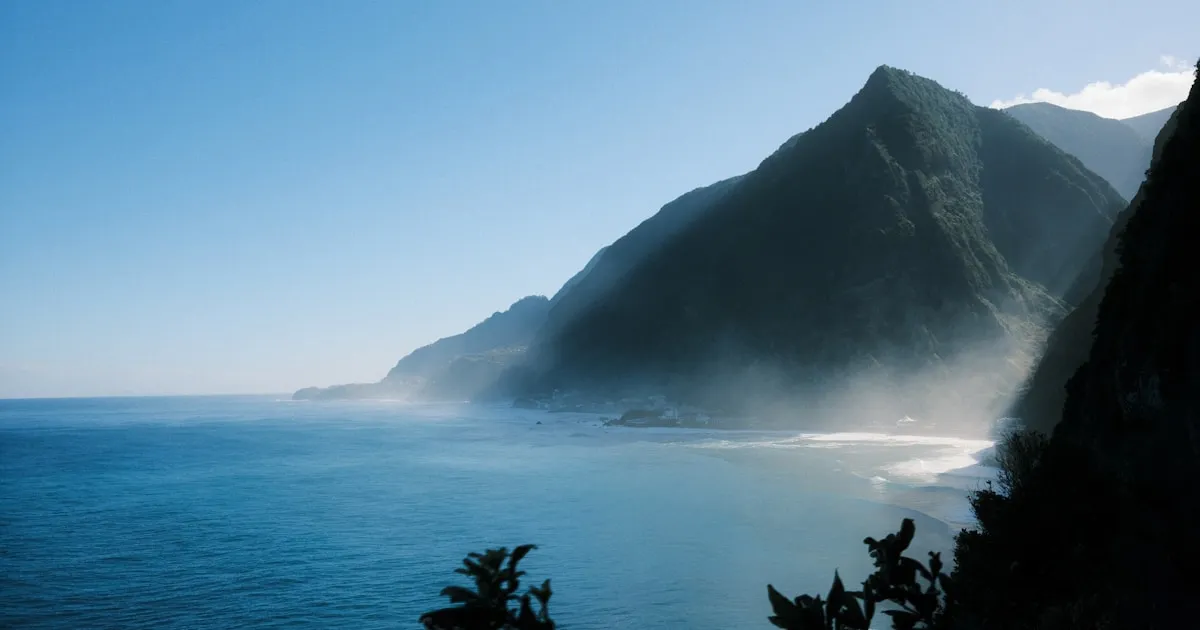
Madeira sits in the middle of the Atlantic, 600 kilometres from the African coast and nearly 1,000 from mainland Portugal. That isolation, combined with a dramatic range of habitats — from sea-level cliffs to cloud forests above 1,500 metres — has produced something extraordinary for birdwatchers: a small island with a concentration of endemic species found absolutely nowhere else on Earth.
Whether you are a serious birder chasing lifers or a nature-curious traveller who simply wants to see something remarkable between hikes, Madeira delivers. The island's compact size means you can visit the best birding sites in a matter of days, and the supporting infrastructure — trails, viewpoints, guides — is excellent.
Madeira's Endemic Bird Species
Three species make Madeira a pilgrimage destination for birders worldwide. Each evolved in isolation over hundreds of thousands of years, adapting to the island's unique environment. You will not find them on any other continent.
Madeira Firecrest (Regulus madeirensis)
The Madeira firecrest is the island's most accessible endemic. Tiny — just nine centimetres long and weighing around five grams — it lives year-round in the Laurisilva forest, flitting through the canopy in search of insects and spiders.
It was only formally recognised as a distinct species in 2003, having previously been classified as a subspecies of the common firecrest. Genetic analysis and differences in its song settled the debate. The Madeira firecrest has a slightly broader orange crown stripe and a subtly different call — once you learn to recognise it, you will hear it constantly in the forest.
Where to see it: The Levada do Furado trail between Ribeiro Frio and Portela is one of the most reliable spots. Walk slowly and listen — the firecrest's high-pitched calls give away its position before you spot it among the laurel branches.
Trocaz Pigeon (Columba trocaz)
The Trocaz pigeon — also called the Madeira laurel pigeon — is a large, handsome bird with slate-grey plumage, a pinkish breast, and a distinctive silver neck patch. It is endemic to Madeira and depends almost entirely on the Laurisilva forest for food and nesting.
This pigeon feeds on the berries and fruits of laurel trees, particularly the til (Ocotea foetens) and the Canary laurel (Laurus novocanariensis). Its survival is directly tied to the health of the ancient forest. When the Laurisilva was under threat from logging, the Trocaz pigeon's population plummeted. Conservation efforts and strict forest protection have allowed it to recover, and current estimates place the population at several thousand individuals.
Where to see it: Fanal and the forests around Ribeiro Frio are prime territory. Early mornings are best — listen for its deep, resonant cooing echoing through the canopy. It is a shy bird, but patient observers stationed near fruiting laurel trees are often rewarded.
Zino's Petrel (Pterodroma madeira)
Zino's petrel is one of the rarest seabirds in the world. Fewer than 100 breeding pairs exist, all nesting in high-altitude burrows on the central mountain peaks of Madeira, above 1,600 metres. It spends most of its life far out at sea, returning to its breeding ledges only between March and October, and only at night.
Seeing a Zino's petrel requires dedication. The nesting sites on the Pico do Areeiro massif are strictly protected and off-limits to visitors. However, dedicated pelagic boat trips from Funchal or Machico offer the best chance of spotting them on the open ocean, along with other pelagic species like Bulwer's petrel, Cory's shearwater, and band-rumped storm petrel.
Zino's petrel was only described as a separate species in 1969 by Paul Alexander Zino, a Madeiran ornithologist. It was previously confused with the similar Fea's petrel. The discovery of its breeding colony on Madeira's peaks was one of the great ornithological finds of the twentieth century.
Other Notable Species
Beyond the three endemics, Madeira and its surrounding waters host an impressive cast of resident and migratory birds:
- Cory's Shearwater (Calonectris borealis) — Thousands breed on Madeira's coastal cliffs. Their eerie night-time calls are one of the island's signature sounds from March to October.
- Berthelot's Pipit (Anthus berthelotii) — A Macaronesian near-endemic found on dry, open ground, especially on Ponta de Sao Lourenco.
- Plain Swift (Apus unicolor) — Another Macaronesian speciality, common over Funchal and the coastal towns.
- Atlantic Canary (Serinus canaria) — The wild ancestor of the domestic canary, bright yellow-green and surprisingly easy to spot in gardens and open woodland.
- Grey Wagtail, Eurasian Buzzard, Kestrel — Resident breeding birds found across the island at various altitudes.
- Migratory waders and vagrants — Madeira's position in the Atlantic makes it a magnet for blown-off-course migrants, especially in autumn. Rare North American species occasionally turn up, making every visit to a wetland potentially exciting.
Best Birdwatching Spots in Madeira
1. Fanal Forest
The ancient laurel forest of Fanal, on the Paul da Serra plateau at around 1,150 metres, is one of the most atmospheric birding locations in Macaronesia. The fog-draped til trees — some over 800 years old — provide habitat for the Madeira firecrest and the Trocaz pigeon, while the open plateau edges attract Berthelot's pipit and buzzards.
Fanal is best visited early in the morning, when fog softens the landscape and the birds are most active. The combination of ancient forest, endemic species, and genuinely magical atmosphere makes this a highlight of any birding trip to Madeira.
2. Ribeiro Frio
Ribeiro Frio sits at around 860 metres in the heart of the Laurisilva on the island's north side. It is the starting point for the Levada do Furado trail, which follows an irrigation channel through dense forest for 11 kilometres to Portela — and it is arguably the single best trail in Madeira for the firecrest and the Trocaz pigeon.
The forest here is lush, humid, and thick with endemic vegetation. Besides the endemics, look for grey wagtails along the levada channel and chaffinches in the clearings. There is also a small trout hatchery at Ribeiro Frio that makes a convenient starting point with parking and a cafe.
Walk the first two to three kilometres of the Levada do Furado slowly, stopping frequently to scan the canopy. The firecrest is almost always present, but it moves quickly — patience and binoculars make all the difference.
3. Ponta de Sao Lourenco
The far eastern tip of Madeira is a stark contrast to the green interior. This semi-arid volcanic peninsula juts into the Atlantic, battered by wind and waves, and its rocky terrain supports a different community of birds.
Berthelot's pipit is common here, hopping across the bare rock. Plain swifts scream overhead. Yellow-legged gulls nest on the sea stacks. During migration periods — especially autumn — the peninsula can attract surprising vagrants blown in from both Europe and the Americas. Seawatching from the tip can also produce shearwaters, petrels, and skuas.
The walk to the tip of Ponta de Sao Lourenco is one of Madeira's classic hikes and combines spectacular coastal scenery with genuine birding interest.
4. Desertas Islands
The Ilhas Desertas — three uninhabited islands lying about 25 kilometres southeast of Madeira — are a protected nature reserve and one of the most important seabird breeding sites in the northeast Atlantic. Bulwer's petrel, band-rumped storm petrel, and Cory's shearwater all breed here in significant numbers.
Access is strictly controlled to protect the wildlife, but licensed boat trips operate from Funchal between May and October. These pelagic excursions pass through deep water where Zino's petrel, Fea's petrel, and other oceanic species are regularly spotted. For serious birders, a Desertas pelagic trip is unmissable.
Best Season for Birdwatching in Madeira
Madeira is a year-round birding destination, but different seasons offer different highlights:
- Spring (March–May): Seabirds return to breeding colonies. Zino's petrel arrives at its mountain nests. Migrant species pass through.
- Summer (June–August): All breeding species present and active. Best conditions for pelagic boat trips. Long daylight hours.
- Autumn (September–November): Peak migration season. Best chance of rare vagrants. Cory's shearwaters prepare to depart. Excellent weather for hiking and birding.
- Winter (December–February): Quieter, but resident endemics — firecrest and Trocaz pigeon — are present year-round. Fewer tourists mean quieter trails. Winter storms can bring unusual seabird sightings from the coast.
For a single visit focused on endemics plus seabirds, May or October offer the best combination.
Guided Birdwatching Tours
While Madeira's birding sites are accessible independently, a local guide dramatically increases your chances of finding the key species — especially the shyer endemics and the pelagic species.
What a good guide provides:
- Expert knowledge of species habits, calls, and seasonal movements
- Access to the best spots at the right time of day
- Pelagic trip organisation, including licensed boat access to the Desertas area
- Spotting scope and identification support
- Knowledge of recent sightings and current hotspots
Several specialist birding guides operate on the island, and many general nature tours include a birdwatching component. Book in advance during peak season (May–October), as the best guides fill up quickly.
Essential Birdwatching Equipment for Madeira
Madeira's terrain and climate call for some specific gear:
- Binoculars (8x42 or 10x42) — Essential for forest birding where birds are often high in the canopy. Waterproof models are advisable given the frequent mist in the Laurisilva.
- Spotting scope — Useful for seawatching from coastal viewpoints and scanning open areas like Paul da Serra.
- Waterproof jacket and layers — The Laurisilva is frequently damp, and mountain areas can be significantly cooler than the coast. Conditions change fast.
- Sturdy hiking boots — Levada trails can be slippery, and the walk to Ponta de Sao Lourenco crosses uneven volcanic rock.
- Field guide — Birds of Macaronesia by Eduardo Garcia-del-Rey is the standard reference for the region.
- Camera with telephoto lens — A 100–400mm or similar zoom is ideal for bird photography in the forest and at sea.
Combine Birdwatching with Levada Walks and Adventure
One of Madeira's great advantages is that you never need to choose between birding and other experiences — they blend naturally. The levada walks that are the island's most famous hiking attraction pass through prime bird habitat. You will see firecrests and Trocaz pigeons on walks that you would do anyway for the scenery.
For those who want to add a shot of adrenaline to their nature trip, our zipline experience in Porto Moniz offers a different perspective on Madeira's wild north coast landscape. Flying above the canopy at speed is an exhilarating counterpoint to a morning of patient birdwatching — and the views from the platform often include buzzards and kestrels soaring on the thermals below.
Book Your Madeira Adventure in Porto MonizThe combination of world-class birdwatching, spectacular hiking, and high-adrenaline activities makes Madeira one of the most complete nature destinations in Europe. Whether you come for the endemic species or simply stumble across a firecrest while walking a levada, the island's birdlife will leave an impression.
Bring your binoculars. You will use them.
Frequently Asked Questions
Is Madeira suitable for families?
Yes, Madeira is very family-friendly. The panoramic zipline has no minimum age — anyone weighing 35 kg to 120 kg can ride, and there are easy levada walks suitable for all ages.
Is Madeira good for solo travellers?
Excellent. It is one of Europe's safest destinations with a growing digital nomad community, especially in Ponta do Sol.
Can seniors enjoy Madeira?
Absolutely. The mild climate, gentle levada walks, cultural attractions, and excellent healthcare make it ideal for over-50s.
Is Madeira romantic?
Very. Sunset boat cruises, cliff-top restaurants, tandem zipline experiences, and wine tastings make it perfect for couples.
Read Also
- 25 Best Things to Do in Madeira — The complete activity guide to the island, from levadas to lava pools.
- Fanal Forest Guide: Madeira's Enchanted Laurel Forest — Everything you need to know about visiting the ancient fog forest.
- Eco Tourism in Madeira — How to explore the island sustainably and support local conservation.