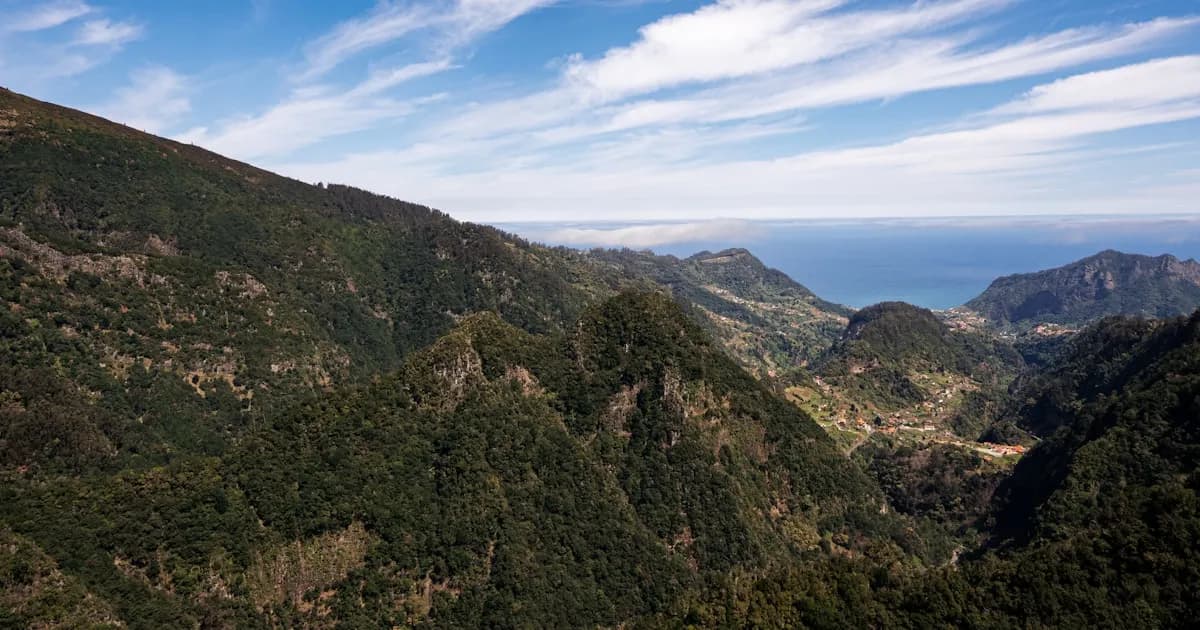
There is a place on Madeira where time stops. Ancient trees twist into shapes that look almost human, morning fog rolls through the canopy so thick you can barely see ten metres ahead, and the only sound is the drip of moisture falling from moss-covered branches. This is Fanal — a remnant of the laurel forest that once blanketed southern Europe millions of years ago and now survives only on a handful of Atlantic islands.
If you visit just one natural wonder on Madeira, make it this one.
A UNESCO World Heritage Forest
The Laurisilva of Madeira was designated a UNESCO World Heritage Site in 1999. Covering roughly 15,000 hectares — about 20 percent of the island — it is the largest surviving area of primary laurel forest in the world. This type of subtropical rainforest once stretched across much of southern Europe and northern Africa during the Tertiary period, between 15 and 40 million years ago. Ice ages wiped it from the continent, but the mild, humid climate of Madeira preserved it.
Fanal sits at the heart of this ancient woodland, on the Paul da Serra plateau at around 1,150 metres above sea level. It is the most accessible and visually striking section of the entire Laurisilva, offering a concentrated experience of what makes this forest so remarkable.
The term "Laurisilva" comes from the Latin laurus (laurel) and silva (forest). Madeira's laurel forest contains at least four endemic tree species found nowhere else on Earth.
The Ancient Til Trees of Fanal
The real stars of Fanal are the til trees (Ocotea foetens), some of which are estimated to be over 800 years old. These are not elegant, straight-trunked trees. They are gnarled, bent, hollowed, and covered in thick coats of moss and lichen. Their branches reach out at impossible angles, some touching the ground before curving upward again, creating natural archways and tunnels.
Walking among them feels like stepping into a fantasy film set — and indeed, photographers and filmmakers from around the world travel to Fanal specifically for these trees. Each one has its own character. Some stand alone in clearings like solitary sentinels. Others cluster together, their branches intertwined as though in conversation.
The largest specimens have trunk circumferences exceeding five metres. Standing beside one that was already centuries old when Columbus sailed past this island is a humbling experience.
The Fog: Why Fanal Feels Enchanted
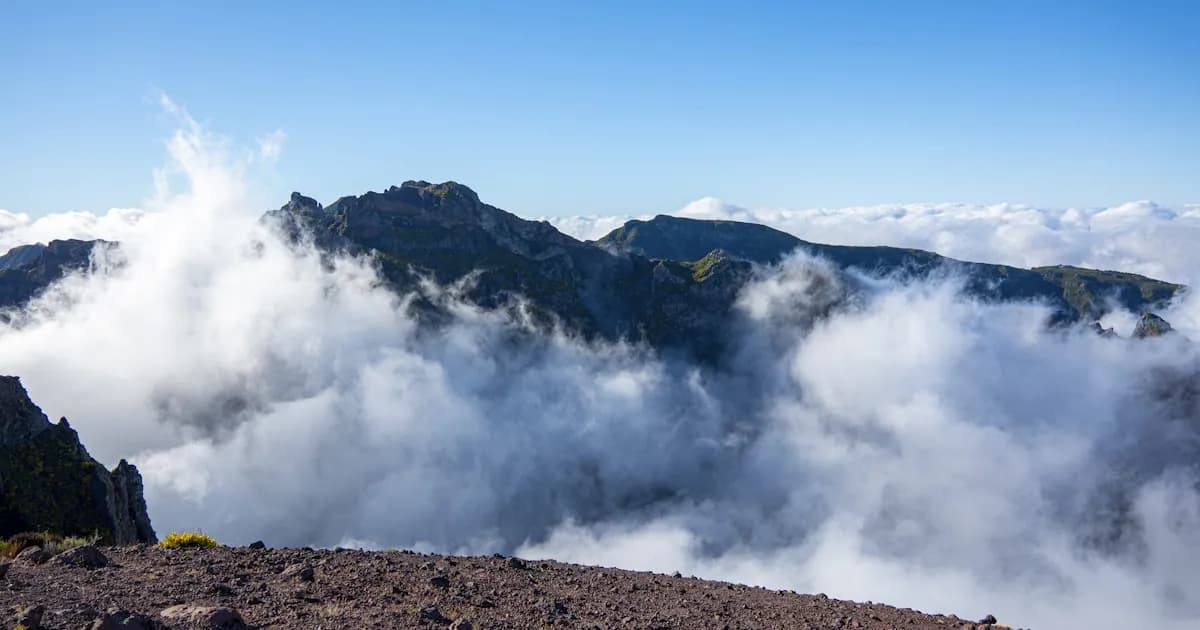
What transforms Fanal from a beautiful forest into something truly otherworldly is the fog. The Paul da Serra plateau sits at the exact altitude where clouds form against the mountains, and Fanal is frequently engulfed in thick mist — especially in the early morning.
When fog fills the forest, visibility drops to just a few metres. The ancient trees appear and disappear as you walk, their twisted silhouettes emerging from the white like figures from a dream. Sounds are muffled. Light becomes soft and diffused. The atmosphere is simultaneously peaceful and slightly eerie.
This is not a rare event. Fog at Fanal is the norm rather than the exception, particularly between October and May. Even in summer, early mornings regularly bring mist to the plateau.
Best Photography Conditions
Fanal is considered one of the best nature photography locations in all of Europe. To capture the most atmospheric shots:
- Arrive before 08:00 — fog is thickest in the early morning and often burns off by midday
- Overcast days are ideal — flat, diffused light eliminates harsh shadows and brings out the greens and textures
- Use a wide-angle lens to capture the scale of the ancient trees against the fog
- Bring a tripod — low light conditions in the mist mean slower shutter speeds
- Shoot in RAW — the subtle tonal range of fog and moss rewards careful post-processing
- Include a person in the frame for scale — the trees look even more impressive with a human reference point
For the most dramatic conditions, visit after a night of rain. The fog tends to be denser, moisture clings to every surface, and the colours of the moss and bark become incredibly vivid.
Hiking Trails Through Fanal
Two official trails pass through or near the Fanal area, both offering different perspectives on the laurel forest.
PR13 — Vereda do Fanal
Difficulty: Moderate | Distance: 10.8 km (point to point) | Duration: 4–5 hours
This is the classic Fanal trail. It starts at the Assobiadores forestry post and descends through the heart of the laurel forest to Fanal, passing through some of the densest and most pristine sections of the Laurisilva. The path weaves between ancient til trees, crosses streams, and follows old forestry tracks through meadows where cattle graze in the mist.
The trail ends at the Fanal forestry house, where the most famous cluster of ancient trees stands. This is a linear route, so you will need to arrange transport at both ends or walk back.
PR14 — Levada dos Cedros
Difficulty: Easy to Moderate | Distance: 5.8 km (one way) | Duration: 2.5–3 hours
Starting from the Fanal car park, this levada trail follows an irrigation channel through dense laurel forest toward Curral Falso. It is less strenuous than PR13 and offers a more intimate experience of the forest, with the gentle sound of water flowing beside you the entire way. The path passes through sections where the tree canopy closes overhead completely, creating green tunnels dripping with moisture.
This is an excellent choice if you want a shorter, easier walk that still immerses you fully in the Laurisilva.
Informal Walks Around the Fanal Clearing
You do not need to commit to a full trail to experience the magic of Fanal. The area around the Fanal forestry house and car park is an open clearing dotted with the ancient til trees. You can walk freely among them for as long as you like — thirty minutes or three hours. This is where most of the famous photographs are taken, and it requires no hiking experience whatsoever.
How to Get to Fanal
Fanal is located on the Paul da Serra plateau in the western part of Madeira, roughly 40 minutes by car from Porto Moniz and about 90 minutes from Funchal.
By car: Take the ER110 road that crosses the Paul da Serra plateau. Coming from the south (Funchal side), follow signs toward Ribeira Brava, then the ER110 up to the plateau. From Porto Moniz on the north coast, take the ER110 south. The turn-off to Fanal is well signposted — look for the sign to "Fanal" or "Posto Florestal do Fanal" on the right side of the road (coming from Porto Moniz) or the left (coming from the south). A narrow paved road leads down to the car park in about five minutes.
Parking: There is a small free car park at the Fanal forestry house. It fills up on weekends and holidays, particularly in the morning. Arrive early or visit on a weekday.
Public transport: There is no regular public bus service to Fanal. The most practical option without a car is to join an organised tour or hire a taxi for the day.
The road to Fanal can be foggy — drive slowly and use your fog lights. In winter, the Paul da Serra plateau occasionally has ice on the road early in the morning.
Best Time to Visit Fanal
For photography and atmosphere: October to May, arriving before 08:00. The cooler months bring more reliable fog and mist.
For hiking: April to October, when trails are drier and days are longer. However, even in summer, the plateau can be cool and damp — bring a waterproof jacket regardless of season.
For fewer crowds: Weekdays at any time of year. Fanal has become increasingly popular with photographers and tour groups, so weekends (especially Sunday mornings) can be busy.
To avoid: Midday on clear summer days. The fog will likely have burned off, the ancient trees lose much of their mystique in harsh sunlight, and you miss the atmosphere that makes Fanal special.
Wildlife in the Laurel Forest
The Laurisilva is not just about the trees. The forest supports a rich ecosystem of species found nowhere else:
- Madeira firecrest (Regulus madeirensis) — the island's only endemic bird, a tiny, energetic creature with a vivid orange crown stripe. Listen for its high-pitched call in the canopy.
- Trocaz pigeon (Columba trocaz) — Madeira's endemic pigeon, larger and darker than the common wood pigeon. It feeds on the berries of the laurel trees and is most active at dawn.
- Madeira long-toed pigeon — a rare subspecies that inhabits the densest parts of the Laurisilva.
- Endemic invertebrates — the forest floor is alive with endemic snails, beetles, and spiders adapted to the humid conditions.
- Mosses and ferns — over 100 species of moss and numerous fern varieties carpet every surface, contributing to the forest's fairy-tale appearance.
Keep your eyes open and your footsteps quiet. The wildlife here is not flashy, but it is genuinely unique.
Combine Fanal with Porto Moniz: The Perfect Day
Fanal and Porto Moniz are only 30 minutes apart by car, making them a natural combination for a full adventure day on Madeira's west coast.
Here is how we suggest you structure the day:
- Early morning (07:00–10:00) — Arrive at Fanal for the fog. Walk among the ancient trees, take photographs, and soak in the atmosphere of the laurel forest.
- Late morning (10:30–12:00) — Drive down to Porto Moniz. Have a coffee overlooking the coast and explore the village.
- Afternoon (12:30 onwards) — Head to Adrenaline Adventures for the zipline and giant swing. After the quiet, mystical morning in the forest, the contrast of soaring at 110 km/h over the Atlantic on a 1.6 km zipline is extraordinary. It is the perfect pairing — contemplation followed by exhilaration.
The drive from Fanal to our base in Porto Moniz descends from the misty plateau through dramatic mountain scenery to the rugged north coast. It is one of the most scenic drives on the island.
Book Your Zipline Adventure in Porto MonizPractical Tips
- Wear layers: Fanal can be 10–15°C cooler than the coast, and the humidity makes it feel colder. A waterproof shell is essential.
- Sturdy footwear: The ground around the trees can be muddy and uneven, even on the informal walks. Hiking boots are recommended.
- Bring water and a snack: There are no facilities at Fanal — no cafe, no shop, no toilet.
- Respect the forest: Stay on marked paths where possible. Do not climb the ancient trees or break branches. This is a protected UNESCO site.
- Allow more time than you think: Most people plan to spend 30 minutes at Fanal and end up staying two hours. The atmosphere draws you in.
Fanal Is Madeira at Its Most Magical
In a world of over-touristed landmarks and underwhelming "must-sees," Fanal delivers something genuinely rare — a place that exceeds every expectation. The photographs you have seen online do not prepare you for standing among 800-year-old trees in thick fog, hearing nothing but your own breathing and the drip of water from ancient branches.
It is one of those places that reminds you why you travel.
View Prices and Book Your AdventureFrequently Asked Questions
Are levada walks dangerous?
Most levada walks are safe and well-maintained. Some trails have narrow sections and tunnels — bring a torch and wear proper hiking shoes.
Do I need a guide for hiking in Madeira?
Well-marked PR trails can be done self-guided. For challenging routes like Pico Arieiro to Pico Ruivo, a guide adds safety and local knowledge.
What should I bring on a levada walk?
Waterproof jacket, hiking boots, water (1.5L minimum), snacks, headtorch for tunnels, and sun protection.
When is the best season for hiking?
April to June and September to October offer the best conditions — mild temperatures, less rain, and fewer crowds.
Read Also
- Best Hikes and Levadas in Madeira — The top 8 trails on the island, from mountain peaks to gentle levada walks.
- Top Instagram Spots in Madeira — A photographer's guide to the 12 most stunning locations on the island.
- Things to Do in Madeira: Ultimate Guide — The complete guide to the best activities and experiences on the island.