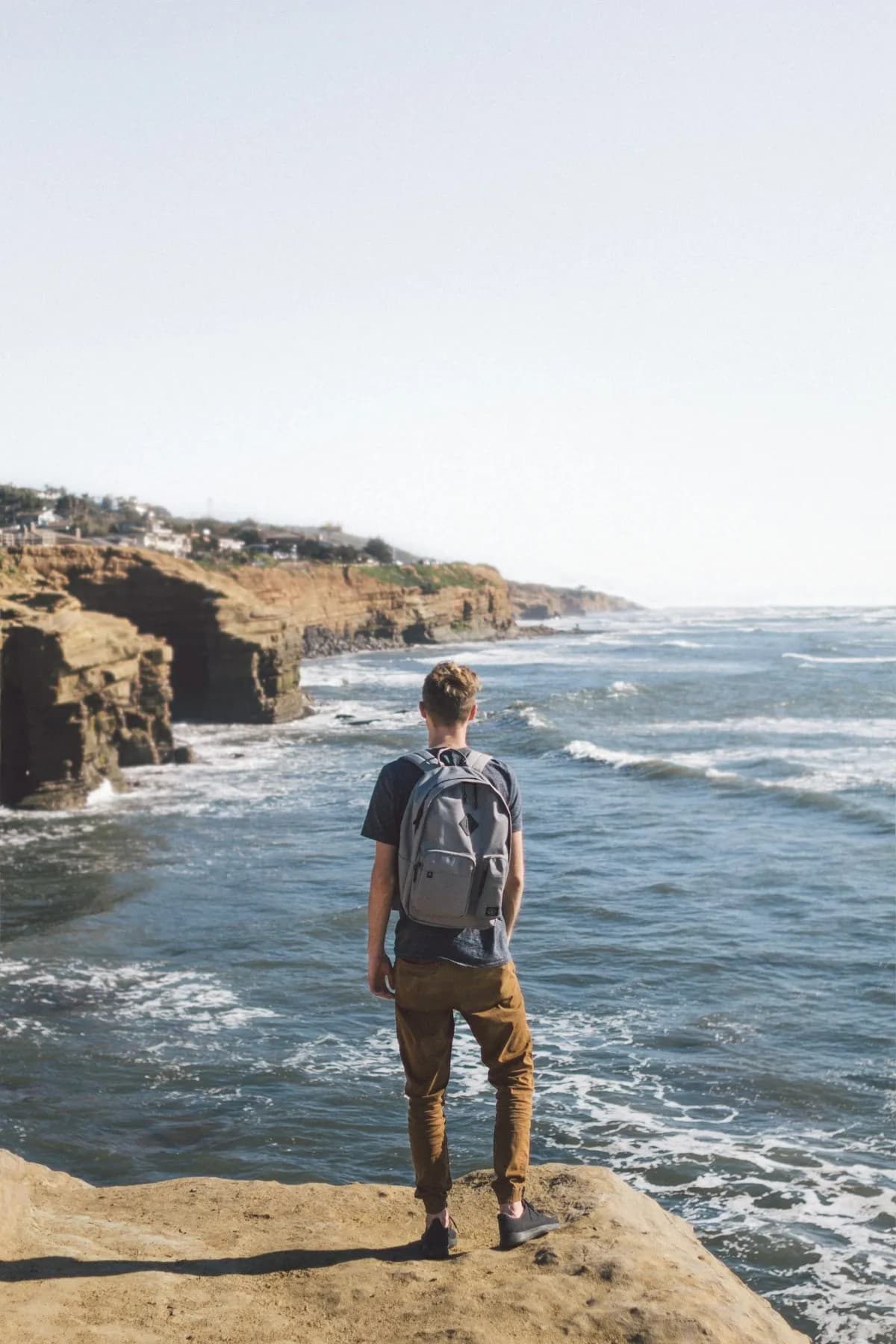
Are you afraid of heights and wondering if you can handle a zipline? You're not alone. An estimated 3% to 6% of the world's population suffers from acrophobia (intense fear of heights), and many more feel some discomfort with elevation. But here's what might surprise you: many of the people who enjoy the Adrenaline Adventures zipline in Porto Moniz the most are precisely those who were afraid before they tried it.
Why do we fear heights? The evolutionary explanation
Fear of heights isn't a weakness — it's a deeply rooted survival response in our brains. Our ancestors who were cautious near cliff edges were more likely to survive and pass on their genes. That's why even infants show caution near elevated edges, as demonstrated in the famous "visual cliff" experiment from the 1960s.
What your brain does when it detects height:
- Amygdala activation: the fear centre triggers an alert
- Adrenaline release: the body prepares for "fight or flight"
- Hypervigilance: senses become heightened
- Muscle tension: the body "freezes" as a protective mechanism
The good news is that this system was designed for situations where there is no protection. On a zipline, with a safety harness, dual attachment systems, and certified equipment, the situation is fundamentally different.
Fear of heights is a normal evolutionary response. You don't need to eliminate it — just manage it. And on a zipline, with all the safety systems in place, your body quickly realises you're protected.
Why zipline is easier than it looks
It might sound counterintuitive, but many people with a fear of heights say the zipline was easier than looking down from a viewpoint. Why?
You're attached and secure
The crucial difference between standing at a viewpoint and being on a zipline is that on the zipline you're physically connected to a safety system. Your body knows it can't fall. This simple fact drastically reduces the fear response.
You're in motion
When you're standing still on a high edge, your brain has time to process and amplify the fear. On a zipline, you're in constant motion. The brain shifts its focus to processing speed, wind, and scenery, reducing the mental space for fear.
Your focus shifts to the experience
The moment you start gliding, something remarkable happens: fear transforms into excitement. The adrenaline your body releases is chemically identical — it's the interpretation that changes. Psychologists call this cognitive reappraisal.
The view is magnificent
In Porto Moniz, the zipline offers views over the Atlantic Ocean, volcanic cliffs, and Madeira's north coast. This natural beauty creates a powerful distraction and transforms the experience into something profoundly positive.
Techniques to manage anxiety before and during the flight
1. The 4-7-8 breathing technique
This technique is used by therapists and even military pilots:
- Inhale through your nose for a count of 4
- Hold your breath for a count of 7
- Exhale through your mouth for a count of 8
- Repeat 3 to 4 times
This technique activates the parasympathetic nervous system, physically reducing anxiety.
2. Focus points
Instead of looking down, choose a focus point on the horizon. It could be a mountain, a cloud, or the ocean line. Keeping your gaze fixed on a distant point reduces the sensation of vertigo.
3. Positive self-talk
Replace "I can't do this" with "I'm safe and I've got this." The brain responds to what we tell it. Simple affirmations like "I'm attached, I'm safe" can make an enormous difference.
4. Progressive muscle relaxation
Contract and relax muscle groups sequentially — feet, legs, abdomen, hands. This helps release tension accumulated from anxiety and gives your brain something concrete to focus on.
5. Pre-visualisation
The night before, close your eyes and imagine yourself completing the zipline successfully. Visualise the views, feel the wind, picture yourself smiling at the end. Visualisation activates the same brain circuits as the actual experience, preparing you mentally.
How the Adrenaline Adventures team supports you
At Adrenaline Adventures, we welcome participants with a fear of heights every day. Our team is trained to help:
- Personalised briefing: we explain exactly what will happen, with no surprises
- Individual pace: we never rush you — we move at your speed
- Constant communication: the team is always in contact via radio
- Pause option: you can stop and breathe on the launch platform for as long as you need
- Genuine encouragement: no pressure, no judgement — just support
Most participants with fear report that the hardest moment is the decision to go. Once on the platform, with the harness on and the team beside them, confidence builds naturally.
At Adrenaline Adventures, we never pressure anyone. If you need more time on the platform, want us to explain everything again, or need a moment to breathe — we're here for you.
What people who were afraid say afterwards
The most common reactions from people who overcame their fear on our zipline:
"I was terrified. I was literally shaking on the platform. But once I started gliding, the fear just vanished. It was the best experience of my life."
"I've been afraid of heights since childhood. My friends convinced me and I'm so glad they did. When I saw the views, I completely forgot about my fear."
"I cried at the end. Not from fear, but from pride at having done it. I've already booked to come back."
These reactions are consistent with what psychological research shows: facing fears in safe environments is one of the most effective ways to overcome them. It's the principle behind exposure therapy, used by psychologists worldwide.
Zipline vs. other height challenges
If you're afraid of heights, zipline is actually one of the best ways to face it, compared with other activities:
| Activity | Exposure level | Control | Exposure duration | |----------|---------------|---------|------------------| | Viewpoint | High (no protection) | Full | Unlimited | | Giant swing | Very high | Low | 1-2 minutes | | Zipline | Moderate (in motion) | Medium | 1-3 minutes | | Rock climbing | High | High | Extended |
Zipline offers an ideal balance: enough exposure to be challenging, but with movement and protection that make the experience manageable.
Practical tips for the day
- Don't go on an empty stomach — but don't eat too much either. A light snack is ideal
- Arrive early — rushing increases anxiety
- Tell the team you're afraid of heights — they'll adapt their approach
- Bring a friend — social support reduces anxiety
- Don't watch zipline videos beforehand — they can amplify fear rather than reduce it
- Trust the equipment — visit our safety page to learn how you're protected
FAQ — Frequently asked questions about fear of heights and zipline
Can I back out on the launch platform if the fear is too much?
Yes, absolutely. We never force anyone to go. However, our experience shows that over 95% of people who reach the platform end up doing the flight — and are glad they did. The team is there to encourage you, but the decision is always yours.
Does fear of heights get worse with age?
It can intensify as we get older, since we become more aware of risks. But this also means we're better at rationalising: we know the equipment is safe, that standards exist, that the team is professional. Your ability to rationalise is your best weapon against fear.
Should I take medication before the zipline?
We strongly advise against any sedative or anti-anxiety medication before the activity. These drugs can affect coordination and reaction time. Breathing techniques and mental preparation are far more effective and safe. If you take regular medication, consult your doctor.
Can zipline help cure my fear of heights long-term?
While a single experience won't cure acrophobia, it can be a significant step. Exposure therapy — gradually facing fears in safe contexts — is the most effective treatment for phobias. Many participants report feeling more confident around heights after their zipline experience.
What if I panic during the flight?
The flight lasts between 1 and 3 minutes, and in most cases the initial panic transforms into excitement within the first few seconds. If you feel panic, focus on your breathing and a fixed point on the horizon. You are completely safe — the equipment keeps you attached regardless of what you do. The team is on radio and will give you calm instructions.
Frequently Asked Questions
How many days do I need in Madeira?
A minimum of 5-7 days to experience the highlights. Two weeks lets you explore every corner of the island.
What is the best time to visit Madeira?
April to June and September to October offer ideal weather, fewer crowds, and better prices.
Do I need a car in Madeira?
A rental car is recommended for exploring beyond Funchal. The island is compact — coast to coast takes about 1.5 hours.
Is Madeira safe?
Madeira is one of the safest destinations in Europe with very low crime rates and welcoming locals.