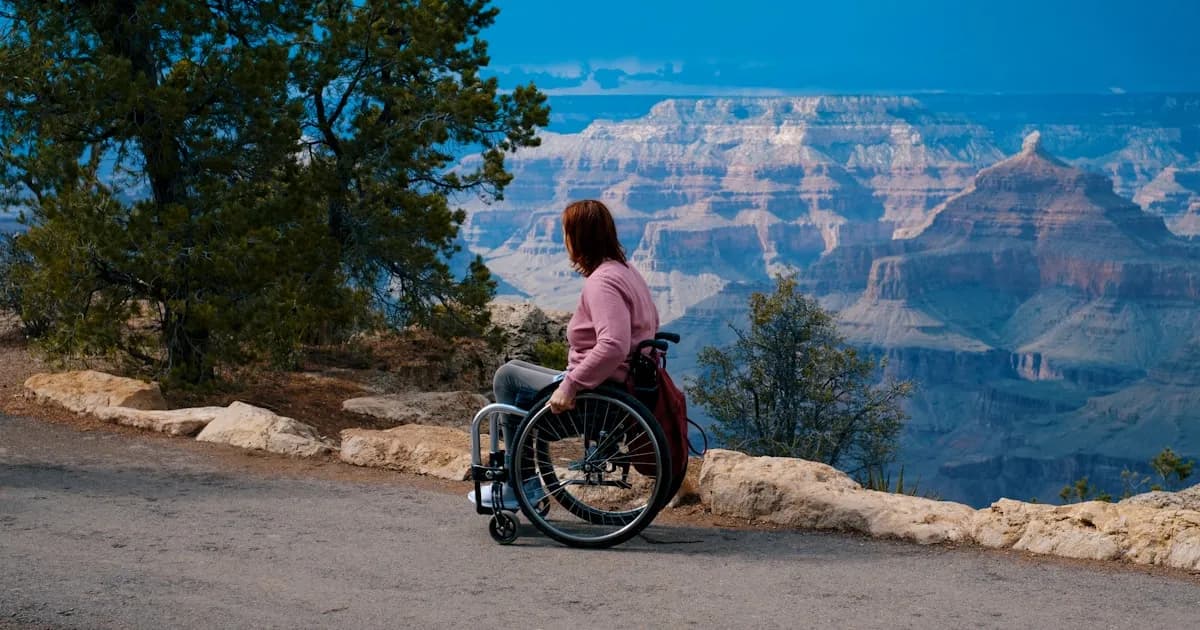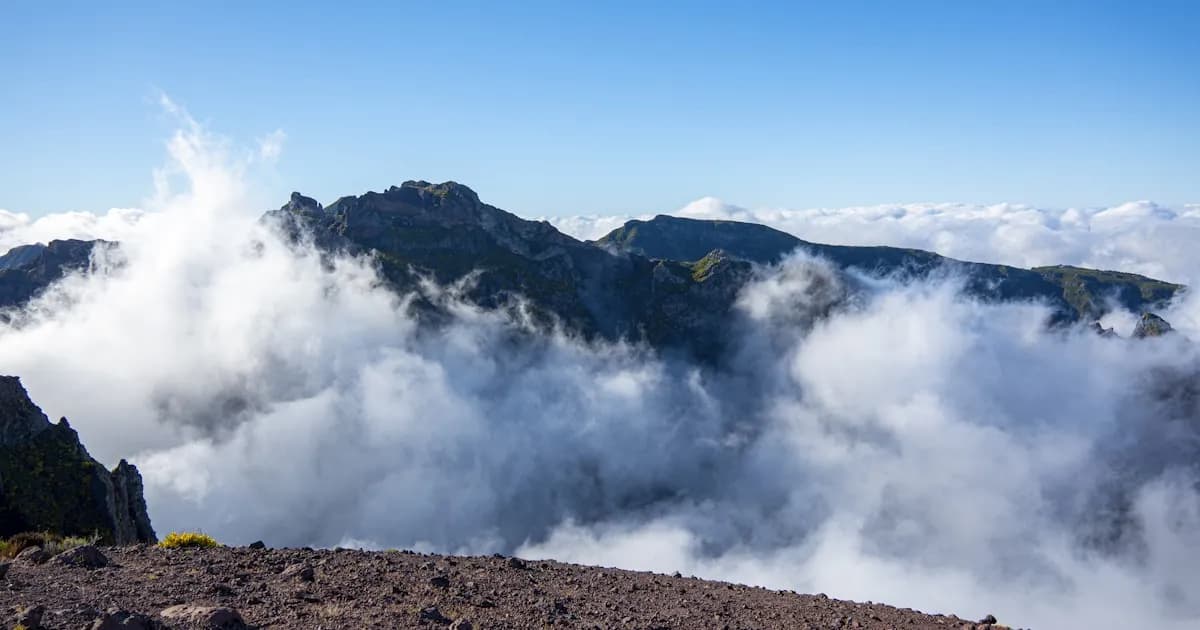
Madeira was not designed with wheelchairs in mind. Steep volcanic hillsides, centuries-old cobblestones, and narrow village streets make that clear enough. But here is what most travel guides do not tell you: the parts of Madeira that are accessible are genuinely excellent, and with proper planning, a wheelchair user can have a rich, fulfilling holiday on this island.
Over the past decade, Funchal has invested heavily in modern pavements, accessible public spaces, and adapted transport. The seafront promenade is world-class. The cable car works beautifully for wheelchair users. Calheta has one of the few fully accessible beaches in the Atlantic islands. And Madeiran hospitality — that instinctive willingness to help — fills many of the gaps that infrastructure has not yet addressed.
This guide is written to be practical and honest. We will tell you what works, what does not, and what to arrange before you arrive.
Accessible Routes Worth Your Time
Not every path in Madeira is an obstacle course. Several routes are smooth, flat, and genuinely enjoyable from a wheelchair.
Funchal Seafront Promenade
This is the jewel of accessible Madeira. The promenade stretches from the Lido area eastward towards the city centre, following the coastline with wide, smooth pavement the entire way. There are no steps, no cobblestones, and no significant inclines. Benches appear every hundred metres or so. Accessible cafes and restaurants line the route. The Atlantic views are constant and spectacular.
Allow at least an hour for a leisurely roll from the Lido to the Forum Madeira shopping centre. The entire stretch is roughly two kilometres and completely barrier-free. Early morning and late afternoon are particularly pleasant, when the light is soft and the promenade is quieter.
The Lido Area
The Lido district is one of Funchal's most wheelchair-friendly neighbourhoods. The pavements are modern and wide. Most restaurants and shops have step-free access or manageable ramps. The Lido Promenade itself connects to the main seafront promenade, giving you a long, uninterrupted accessible route along the coast.
The Lido swimming complexes have varying levels of accessibility — some have pool hoists and adapted changing facilities, while others do not. If pool access is important to you, contact the specific complex in advance.
Monte Cable Car (Teleferico do Funchal)
The cable car from Funchal to Monte is fully wheelchair accessible and eliminates roughly 560 metres of elevation gain that would otherwise be impossible. The lower station near the Old Town has ramp access to the boarding area. Staff are experienced with wheelchair users and will hold the cabin steady while you board.
At the top, the Monte Palace Tropical Garden is partially accessible. The main terraces, the tile collection, and several viewpoints can be reached on paved paths. Some garden areas involve steep sections that are not suitable for manual wheelchairs, but the accessible portions alone justify the visit — the panoramic views over Funchal and the harbour are breathtaking.
Important note: The famous Monte toboggan ride (wicker basket sledge) is not wheelchair accessible. But the cable car journey itself is an experience.
Adapted Taxis and Getting Around
Funchal has several taxi companies operating adapted vehicles with ramps or hydraulic lifts. These are not abundant, so booking in advance is essential rather than optional.
How to arrange adapted transport:
- Contact your hotel before arrival and ask them to arrange an adapted taxi for your airport transfer and ongoing use during your stay
- Request the driver's direct phone number so you can arrange pickups independently
- Book at least 24 hours ahead for excursions outside Funchal, as adapted vehicles may need to be reserved from a limited fleet
- Budget roughly 20 to 30 percent more than standard taxi fares for adapted vehicles
The public bus system (Horarios do Funchal) has low-floor buses on some urban routes, but reliability varies and many rural routes use older vehicles without wheelchair access. For anything beyond the Funchal city centre, adapted taxis are the realistic option.
Car rental: Several companies offer hand-controlled vehicles, but these must be reserved well in advance — often weeks, not days. Sixt and Europcar at Madeira Airport are the most reliable for adapted vehicles.
Accessible Hotels
Funchal's hotel zone along the Estrada Monumental offers the best combination of accessibility and location. The following categories will help you choose wisely.
Large resort hotels such as the Savoy Palace, Pestana Carlton Madeira, and the Royal Savoy have purpose-built accessible rooms with roll-in showers, grab bars, and wider doorways. These properties also have lifts to all floors, accessible pool areas, and ground-floor restaurants. Always confirm your specific room configuration directly — not all "accessible" rooms are equal.
Mid-range hotels in the hotel zone generally have lifts and can accommodate wheelchairs in standard rooms, but purpose-built accessible bathrooms are less common. Ask specifically about the bathroom layout, shower type, and door widths before booking.
Boutique hotels and quintas in the old town or rural areas are often in historic buildings that are inherently inaccessible. Steep approaches, narrow doorways, and steps are common. Unless a property specifically advertises wheelchair accessibility, assume it is not suitable.
Practical tip: Request a room on a lower floor even in hotels with lifts. In the rare event of a power cut or lift maintenance, a lower floor makes evacuation safer and simpler.
Beach Access: Calheta
Madeira is not known for sandy beaches, but Calheta is the exception — and it is the island's most accessible beach.
Calheta's man-made golden sand beach has a boardwalk that extends across the sand, paved access from the car park, and during summer months (June through September) provides beach wheelchairs that can be used on the sand and into the water. The beach is sheltered by a breakwater, so the sea is calm — an important factor for anyone transferring into a beach wheelchair.
There are accessible toilets near the beach, and several restaurants along the Calheta marina are step-free. The marina promenade itself is flat and smooth, making it a pleasant area to explore beyond the beach.
Getting there: Calheta is roughly 45 minutes west of Funchal by car. Arrange adapted taxi transport in advance. There is accessible parking close to the beach entrance.
Other beaches and natural pools on the island are generally not wheelchair accessible. Porto Moniz's famous natural pools, for example, involve steps carved into volcanic rock. Calheta is the clear choice for wheelchair users who want a beach day.
Restaurant Accessibility
Funchal's restaurant scene is increasingly accessible, though the picture is uneven.
Where to find accessible dining:
- The hotel zone and Estrada Monumental — Most restaurants here are modern, with step-free entrances and accessible toilets. This is the easiest area for wheelchair users to dine without advance research.
- Forum Madeira shopping centre — Fully accessible with lifts, accessible toilets, and a food court plus several sit-down restaurants.
- Calheta marina — The restaurants along the marina promenade are generally accessible.
- The seafront promenade — Restaurants and cafes along the promenade typically have outdoor terrace seating at pavement level.
Where to be cautious:
- Zona Velha (Old Town) — Funchal's atmospheric old quarter has wonderful restaurants, but many involve steps at the entrance, narrow doorways, or are only reachable via steep cobblestone streets. Call ahead and ask specifically about wheelchair access.
- Village restaurants outside Funchal — Rural restaurants vary enormously. Some are fully accessible; others require navigating steps and uneven ground.
General tip: Portuguese restaurants are typically very accommodating. If you call ahead, many will rearrange tables, offer a different entrance, or find practical solutions. The willingness to help is genuine and consistent across the island.
Medical Equipment Rental
If you prefer not to travel with bulky equipment, Madeira has several options for renting mobility aids.
What you can rent locally:
- Manual and electric wheelchairs
- Mobility scooters
- Shower chairs and bath aids
- Portable ramps
- Hospital-style beds (delivered to your hotel)
How to arrange rental:
Contact a medical equipment supplier at least two weeks before your trip. Your hotel concierge can recommend local providers, or search for "ortopedia Funchal" to find specialist shops. Expect to provide your measurements, weight, and specific requirements. Most suppliers can deliver equipment directly to your hotel or to the airport.
Pharmacies: Funchal has well-stocked pharmacies (look for the green cross sign) that carry basic aids such as cushions, support braces, and incontinence supplies. Pharmacists often speak English and are helpful with recommendations.
Hospital and clinics: Funchal's Hospital Dr. Nelio Mendonca is the main public hospital and has a modern A&E department. Several private clinics in the hotel zone offer faster service for non-emergency medical needs. If you have a complex medical condition, carry a summary letter from your doctor — translated into Portuguese if possible.
What to Plan Ahead
The difference between a frustrating trip and a wonderful one often comes down to advance planning. Here is what to arrange before you leave home.
At least one month before travel:
- Book your hotel and confirm the specific accessible room configuration in writing
- Reserve an adapted vehicle for airport transfers and excursions
- Arrange medical equipment rental if needed
- Check your travel insurance covers wheelchair damage and medical equipment
At least one week before:
- Confirm all adapted transport bookings
- Send your hotel a list of specific requirements (shower chair, bed height, fridge for medication)
- Download offline maps of Funchal — mobile signal is unreliable in some areas
- Research restaurant accessibility for places you want to visit
On arrival:
- Test your hotel room immediately and flag any issues while staff can still make changes
- Get your adapted taxi driver's direct phone number
- Ask hotel reception for their accessibility recommendations — local knowledge is invaluable
Airline considerations: TAP Air Portugal and most airlines serving Madeira handle wheelchair transport, but procedures vary. Notify your airline at booking and again 48 hours before departure. Madeira Airport (FNC) has jet bridges for most flights, but some smaller aircraft require ambulift transfers — confirm this with your airline.
Zipline and Adventure Accessibility
Adventure activities and wheelchair use are not mutually exclusive. At Adrenaline Adventures, we believe that the thrill of flying over a Madeiran valley should not be automatically off-limits because of a mobility impairment.
Our zipline experiences have varying accessibility depending on the specific activity and the individual's abilities. Some participants with lower-limb impairments who have strong upper-body control have completed our ziplines with adapted harness arrangements. Each case is different, and we assess accessibility on an individual basis.
What we need from you: A conversation. Contact us with details about your mobility level, any equipment you use, and what you would like to try. We will be honest about what is and is not possible, and if we can make it work safely, we will.
Other adventure activities: Boat trips along the coast are sometimes accessible depending on the vessel — ask specifically about boarding arrangements. Whale-watching tours from Funchal marina vary; some operators have accessible boats while others do not.
We would rather have an honest conversation about what is possible than make assumptions. If you are interested in any adventure activity, contact us and we will work through the options together.
Madeira Is Worth the Effort
Madeira will not pretend to be fully accessible. The volcanic terrain, the historic architecture, and the mountain roads make that impossible in many areas. But the accessible parts of the island — the Funchal promenade, the cable car, Calheta beach, the hotel zone — are genuinely wonderful. They are not consolation prizes. They are highlights that every visitor enjoys, wheelchair or not.
And then there is the human element. Madeirans are instinctively helpful in a way that goes beyond professional courtesy. Doors are held open. Tables are moved. Strangers offer assistance on ramps. It is a culture that naturally accommodates, and that makes a tangible difference to the experience of travelling in a wheelchair.
Plan well, book ahead, and come with realistic expectations. Madeira will reward you with Atlantic light, extraordinary landscapes, exceptional food, and the kind of warmth that turns a good holiday into a memorable one.
Ask Us About Accessible AdventuresFrequently Asked Questions
Do I need a visa for Madeira?
EU/EEA citizens need only an ID card. UK, US, Canadian, and Australian citizens can visit visa-free for up to 90 days.
Is the tap water safe in Madeira?
Yes, tap water in Madeira is safe to drink throughout the island.
What plug type does Madeira use?
Type C and F plugs with 230V. UK and US visitors need an adapter.
Do I need cash in Madeira?
Cards are accepted almost everywhere in Funchal and tourist areas. Carry some cash for rural areas, markets, and small cafés.
Read Also
- Madeira Accessibility Guide — The complete guide to visiting Madeira with reduced mobility, covering all attractions and transport.
- Things to Do in Madeira — The ultimate guide to activities and experiences across the island.
- Madeira for Seniors — Why Madeira is the perfect destination for over 50s, with gentle walks and cultural highlights.